



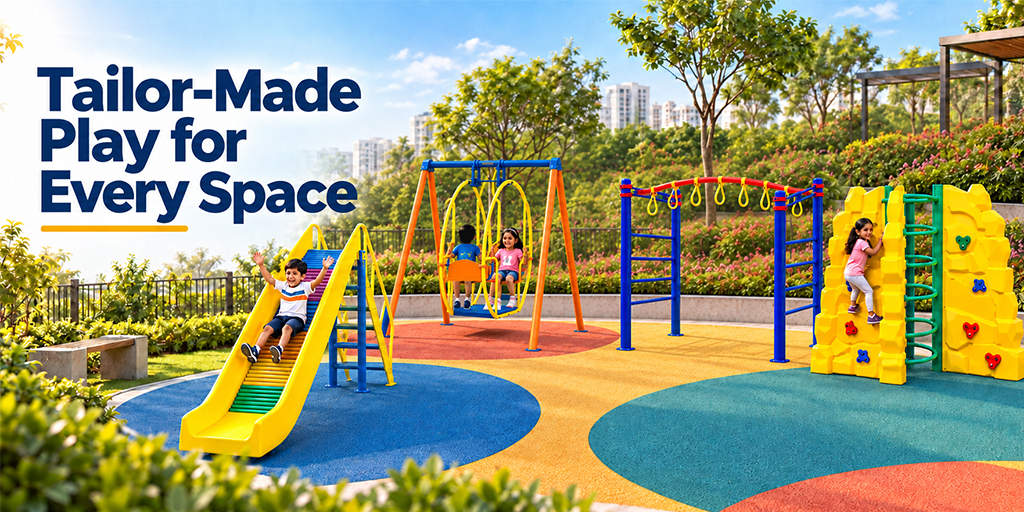
How to Plan Outdoor Playground Equipment for Small, Medium, and Large Spaces
Outdoor play gives children more than a place to have fun. Research shows that children who spend at least two hours outdoors can get 27% more moderate-to-vigorous physical activity than children who spend less time outside. Outdoor play also supports physical health, social skills, concentration, and learning.
That makes thoughtful playground planning important for schools, communities, residential developments, parks, and other spaces.
Every site brings a different design challenge. One location might have less than 500 square feet behind a daycare, while another may offer a 3,000-square-foot park with enough room for a full range of children's play equipment.
The key to a successful playground is knowing how to select and combine outdoor playground equipment so the spaces feel open and give children opportunities to enjoy the outdoors and stay active.
Here is a practical guide to planning outdoor play equipment for small, medium, and large playground spaces.
1. The Small Playground: Under 500 Sq. Ft.
When you are choosing playground equipment for kids in a tight footprint, such as an HOA courtyard or urban pocket park, every square foot matters.
The biggest mistake people make in small spaces is trying to squeeze in too many separate structures. This can create a cramped environment and make it harder to maintain the required clearance around equipment.
Build Vertical, Not Horizontal
Instead of spreading individual items across the ground, use equipment that combines several activities in one structure.
A compact composite structure can let kids climb steps, use playground slides, and interact with activity panels within a single play system. This approach can provide more activities without taking up unnecessary ground space.
Match Equipment to the Age Group
For toddlers aged 6-23 months, choose equipment designed specifically for this age group. Toddler play areas can include low platforms, gentle ramps, crawl tunnels, ground-level activities, and other age-appropriate features.
For preschoolers aged 2-5 years, choose equipment that matches their size and developmental abilities. Elevated platforms should include the appropriate protective barriers and fall protection required for the equipment.
Rethink Swings in Tight Places
Traditional playground swings might look compact in a catalogue, but their use zones can take up a significant amount of space.
Swing use zones extend in front of and behind the swing. The required area depends on the type and height of the swing, so check the applicable safety requirements before adding swings to a compact playground.
In a 400-square-foot yard, a swing frame can take up a large portion of the usable play area.
Choose Practical Surfacing
Unitary surfaces such as poured-in-place rubber can work well in compact playgrounds when they are properly designed and installed.
Other surfacing options, including synthetic turf and suitable loose-fill materials, may also be appropriate. The surface should meet the applicable impact attenuation and accessibility requirements for the playground.
If you're comparing different options for a compact playground, Why a Playground Multiplay Station Makes Sense explains the benefits of choosing a multi-activity structure and what to consider before making a decision.
2. The Medium Playground: 1,000-2,000 Sq. Ft.
A medium-sized site, such as one designed for playground equipment for schools, churches, or neighbourhood parks, gives you more room to combine a primary play structure with standalone equipment.
The key is to create separate activity areas without making the playground feel crowded.
Establish a Natural Play Loop
Arrange equipment so children can move naturally between activities.
For example, children might climb a structure, use a slide, and then return to the main play area without crossing through another activity zone. A well-planned layout can reduce unnecessary traffic through busy areas.
Pair Slides With Challenging Climbers
Playground slides can provide more varied play when they are integrated with playground climbers.
Depending on the age group, you can combine slides with climbing walls, rope nets, arch climbers, or other climbing features. This creates opportunities for children to climb, balance, and slide within the same play area.
Place Swings Away From Main Traffic
Medium-sized playgrounds can often accommodate a swing bay. Place moving equipment toward a corner or along the outer edge of the playground when possible.
This helps keep swing paths away from major running routes and other high-traffic areas.
Respect Clearance Zones
Every piece of outdoor playground equipment needs an appropriate use zone.
- Check the manufacturer's requirements and applicable safety standards for each piece of equipment.
- Provide the required clearance around playground climbers based on their type and configuration.
- Keep slide exits clear so children have enough room to safely leave the slide.
- Do not allow use zones to overlap where the applicable standards prohibit it.
Manage Loose-Fill Surfacing
Engineered Wood Fibre (EWF) and rubber mulch can be used as playground surfacing when properly installed and maintained.
Loose-fill materials can move and compact over time, so they need regular inspection and replenishment. Wear mats can also help protect high-traffic areas, such as spaces beneath swings and at slide exits.
If you're planning a playground and aren't sure how to bring all the pieces together, Overwhelmed by Playground Planning? Here’s Your Step-by-Step Blueprint provides a practical approach to planning the site, selecting equipment, and creating a functional layout.
3. The Large Destination Playground: 3,000+ Sq. Ft.
Large community parks have more space to work with, but a wide-open layout can become difficult to supervise when different age groups share the same area.
A better approach is to divide the children's play equipment into age-appropriate zones.
Toddler Zone: 6-23 Months
Focus on equipment designed for very young children, such as:
- Low platforms
- Gentle ramps
- Crawl tunnels
- Ground-level activity panels
- Full-bucket swings designed for toddlers
Keep the equipment simple and easy for caregivers to supervise. Any fencing or separation should also follow the applicable playground safety requirements.
Preschool Zone: 2-5 Years
Preschool areas can include:
- Shorter playground slides
- Low climbing structures
- Spring rockers
- Ramps
- Age-appropriate ladders
- Belt or full-bucket swings, where suitable
The equipment should match the physical abilities and developmental needs of preschool-age children.
School-Age Zone: 5-12 Years
Older children can use more challenging playground climbers and other equipment designed for their age group.
Options can include:
- Arch climbers
- Dome or net climbers
- Climbing walls
- Monkey bars
- Vertical sliding poles
- More challenging slides
- Tire swings
These features can create more opportunities for climbing, balancing, swinging, and active physical play.
Need more information on planning playground equipment around age groups? Read our guide.
Preserve Clear Sightlines
Good visibility is especially important on a large playground. Place benches to avoid unnecessary visual barriers between activity zones, and keep major pathways easy to follow. A layout with clear sightlines makes it easier for adults to supervise children while allowing different age groups to enjoy equipment suited to their abilities.
Conclusion
Choosing the right outdoor playground equipment is easier when the design starts with the space, age group, safety needs, and type of play you want to encourage. Arihant Play helps schools, parks, communities, and other spaces find practical playground solutions designed around these needs.
Not sure which equipment is right for your project? Explore Arihant Play’s guide to choosing the right playground equipment for kids and take the next step toward creating a playground children will enjoy for years to come.
FAQs
How do I choose the right outdoor playground equipment for my space?
Start by looking at the available space, children's age groups, expected number of users, and the type of play you want to encourage. These factors can help you decide whether you need a compact multiplay system, individual playground slides, playground swings, playground climbers, or a combination of different equipment.
What playground equipment is best for small spaces?
Multiplay systems are often a practical choice for smaller playgrounds because they combine several activities in one structure. A well-designed system can include climbing, sliding, and interactive play while leaving enough room for safe movement and required clearances.
How much space should I leave around playground equipment?
The required space depends on the type, height, and configuration of the equipment. Each piece of outdoor playground equipment should have the appropriate use zone around it, as specified by the manufacturer and applicable playground safety standards. Slide exits and swing areas typically require additional space.
Which playground equipment is suitable for different age groups?
Equipment should match children's age and developmental abilities. Toddlers may benefit from low platforms, ramps, crawl tunnels, and ground-level activities. Preschoolers can use age-appropriate slides, climbers, and swings, while older children can use more challenging playground climbers, slides, overhead equipment, and other active-play features.
What should I consider when planning playground equipment for schools?
Schools should consider the available space, age groups, supervision, accessibility, circulation, surfacing, and equipment use zones. A balanced selection of playground equipment for schools can provide opportunities for climbing, sliding, swinging, balancing, and social play while keeping the layout easy to supervise.