



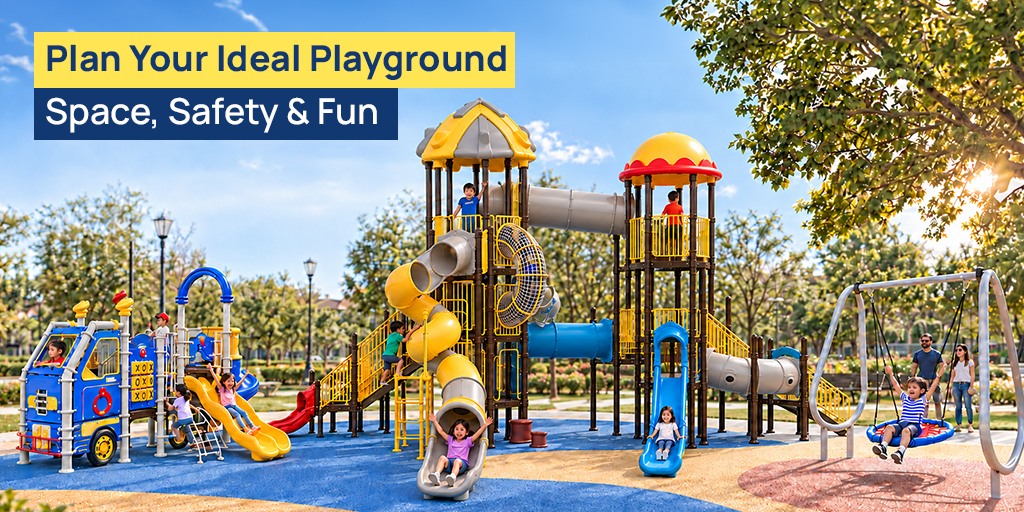
Overwhelmed by Playground Planning? Here’s Your Step-by-Step Blueprint
Planning a playground has become a more demanding job than it used to be. A planner today has to think about using creative outdoor playground equipment within a play area, but that is only part of the picture. Space is often tight, and safety mandates keep shifting as well. Keeping up is not easy, the solution?
This guide offers a practical route through those decisions. It covers how to plan playground equipment around the space you actually have, while keeping the needs of the people who will use it at the centre of the process.
1. Plan around space
Look at the land plot before you plan anything else. Available space gives you your boundaries, though it should not limit your thinking. Take a holistic approach so the park can adapt over time, and leave deliberate buffer zones for future expansion as community needs change.
Maximising space is a priority, but packing park and playground equipment closely together creates bottlenecks and safety hazards. It’s best to spread the features out enough to keep clearance zones safe.
If the footprint is tight, modular multi-play systems could be used. They consolidate play value into a smaller area without eating up ground space, and they can accommodate several children in one unit. Inclusive ground-level elements like duplex multi-play systems work well here too, since they let children of different physical and cognitive abilities interact together across the park and playground equipment.
Smart spatial planning also means tracking high-velocity zones. Fast-moving features like swings should sit away from primary walking paths to reduce the risk of collisions.
If you are weighing up multi-activity play systems against individual equipment, our comparison guide breaks down the trade-offs: Multi Activity Play Systems vs Individual Equipment: Which Is Better?
2. Plan around age
Think of the park layout as a gradient of energy levels. Toddlers' play areas belong close to the entrance so parents can watch them easily. For the transition zone where age groups overlap, anchor the space with duplex multi-activity play systems. These two-storey structures stack a lot of play value into smaller spaces.
Low-to-the-ground playground equipment such as sensory panels can sit underneath, while the upper deck keeps older children engaged. Further back, heavy-duty climbers like rock walls and cargo nets attach directly to the system. This gives pre-teens a physical upper-body challenge, and it naturally keeps fast-moving older children separated from unpredictable toddlers.
3. Think about safety
Safety goes well beyond basic regulatory compliance on a new site. Children do not play the same way every day. They want to run, jump, and challenge themselves in different ways, and preparing for those behaviours should form part of the park design.
Designing a park with outdoor playground equipment means looking past baseline mandates and thinking carefully about fall heights, impact-absorbing zones, and structural clearance. Safety calculators help during the initial design phase, but ground surfaces deserve just as much attention.
Shock-absorbing rubber flooring should form part of the design. The layout should also maintain clear sightlines so supervisors can monitor the whole space from any angle without blind spots. Following these guidelines reduces injury severity and gives parents the confidence to let children play freely.
4. Plan around need
Once the safety plan has fallen into place, think about the needs of the people who will use the space. A good design plan means deciding which outdoor playground equipment to install and who it is for. Three broad groups usually shape the answer.
Toddlers do well with low-impact playground play equipment. Spring riders and sensory panels suit this age group.
School-age children thrive on interactive play. See-saws, merry-go-rounds, and similar outdoor playground sets work well for them.
Older children want physical challenge, which means high-altitude outdoor playground equipment such as advanced climbing playground equipment and rope courses.
5. Variable Reward: What Keeps Children Coming Back
Beyond ticking off demographic needs, internal variation within the layout is what keeps a park working over the long term. If a neighbourhood needs outdoor play equipment for schools, installing three identical swing sets or predictable climbing frames will not hold attention. A better result comes from a solid mix of a high-intensity climbing playground equipment matrix, a low-impact sensory pathway, and an open grassy lawn sharing the same zone.
This matters because a rigid checklist assumes every child in an age bracket plays the same way every day. In reality, a ten-year-old might want an intense upper-body challenge on Monday and a quiet space to sit and talk with friends on Tuesday. Different heights, textures, and play types keep the park from getting boring. They accommodate changing energy levels, and they stop children from using play area equipment in dangerous ways just to create their own excitement.
Investment In Long-Term Engagement
Investment is the effort users put into a space, and that effort increases the likelihood of future engagement. For playgrounds, investment comes from families and communities through active participation and emotional connection.
Benches For Caregivers
Parents and caregivers invest their time when they feel comfortable, so shaded seating with clear sightlines allows them to relax while supervising.
Open Lawns For Free Play
Not every activity requires multiple pieces of playground equipment, and open grassy spaces invite running, picnics, and unstructured games. Families invest emotionally in these shared experiences, and that emotional bond strengthens their long-term attachment to the space.
Extended Examples
A few practical scenarios show how smart spatial choices change user behaviour.
Residential Complex Playground
When space is limited, the strategy has to shift. A smart layout uses a small footprint by anchoring the zone with a duplex multi-activity play system. Stacking features vertically lets toddlers explore sensory panels on the ground level while older children use climbers to scale the structure. Perimeter benches keep parents close and comfortable. The result is high asset utilisation, a safe environment, and families who want to spend time there.
School Playground
Schools deal with high-intensity spikes during recess, so the infrastructure has to handle serious traffic. Choosing highly durable outdoor play equipment for schools, such as reinforced slides and heavy-duty swings, ensures the park survives daily wear. When the layout is clear and transparent, children build strength and social skills through collaborative play without creating safety blind spots. Teachers get reliable sightlines for easy supervision, and the school gets a long-term asset.
Community Park
Large public spaces require a different approach focused on variety and dwell time. Mixing open lawns, shaded seating, and interactive elements like merry-go-rounds encourages families to spend entire afternoons picnicking and socialising. Avoiding crowded equipment layouts and keeping fast-moving zones away from walking paths reduces accidents naturally. The space becomes a neighbourhood hub that strengthens community ties.
Conclusion
Playground planning does not have to be overwhelming. Start with the site and its constraints. Move through space, age, safety, and need in that order. Build in variety through diverse park and playground equipment. Design for families and communities so they invest in the space over time. The result is a playground that children enjoy, parents trust, and communities value.
FAQ
How much space is needed for playground equipment?
When you're figuring out space for playground equipment, think about the safety zone first. Ideally, you'll want at least 6 feet of clear space in every direction, though swings need double the height of their top bar. And as a rough guide, plan for around 75 square feet of play area per child.
What types of outdoor play equipment suit different age groups?
Age matters a lot when you're picking out equipment. What works for a toddler won't work for an older child. Toddlers benefit from gentle playground play equipment like spring riders, while older children enjoy outdoor playground sets with swings, slides, and rope courses.
How can schools ensure durability of outdoor play equipment?
School playgrounds see heavy use every single day. That kind of traffic demands equipment built to last. That is why outdoor play equipment for schools should be made with reinforced joints, weather-resistant finishes, and impact-absorbing surfaces to withstand daily use.
Why mix traditional and modern park and playground equipment?
Combining classics like swings and see-saws with climbing playground equipment and sensory panels keeps children engaged and supports varied play styles. Doing this helps children enjoy playing, build cognitive skills, and develop their physicality as well.