



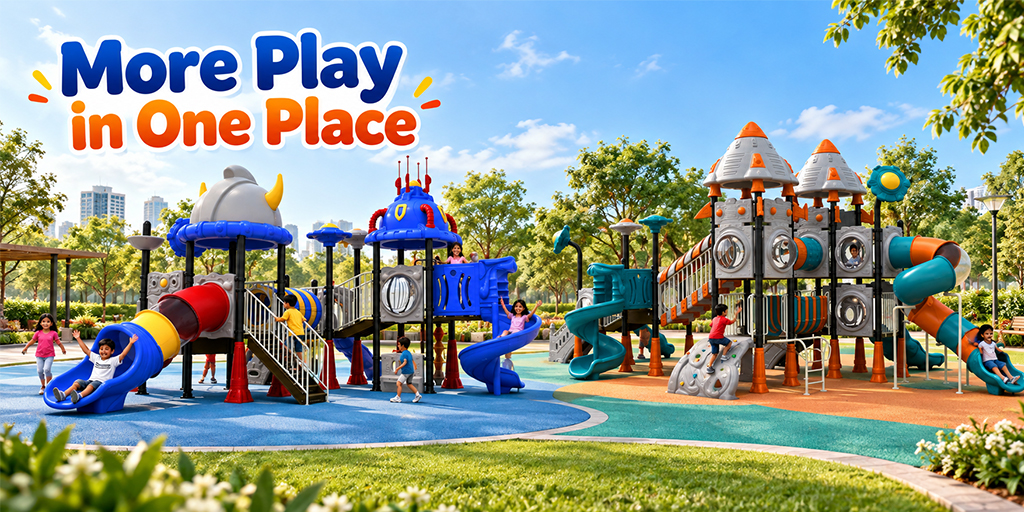
Modern Playground Design: Why a Playground Multiplay Station Makes Sense
Schools often need to make the most of limited space. Parks face the same challenge, and housing societies do too. For park and outdoor play area planners, in these situations, the thought of installing a playground multiplay station is a practical solution.
By combining several activities into one connected structure, it allows children to enjoy a variety of activities without needing extra ground area.
It’s a boon for maintenance as well; repair and upkeep become simpler because most of the equipment sits in one system rather than being scattered across separate installations.
Understanding Multi-Activity Play Systems
When planning a playground, there are two main paths to consider. One could do with a multi-activity play system, sometimes called a playground combination set or modular playground equipment. These all-in-one play systems are excellent for tight spaces and community play as it brings several activities together in one connected design.
The other path is individual equipment. In this group, you'll find classic favourites like swings, slides, climbers, and spinners. The best part about going with individual pieces? Each one comes with its own independent foundation and safety zone. This gives you total freedom to spread them out, mix and match, or fit them perfectly into whatever space you have
Choosing between them depends on the site, the budget, and the type of play experience you want to create.
If you’re deciding which individual features fit your site, see our guide on How to Choose Playground Slides, Swings & Climbers for Your Space.
Space and Cost Benefits of Playground Play Systems
A playground multiplay station makes efficient use of space, since several activities can fit into a smaller footprint when safety zones are planned carefully. Standalone equipment, by contrast, requires separate use areas, especially for swings.
When choosing between the two, think about cost; it differs. Playground play systems often reduce the cost per activity because features share one structure. Individual units need separate foundations and surfacing, which can increase expenses. Upfront budgets vary too. Standalone pieces usually cost less initially, while multi-activity outdoor play equipment requires a bigger investment at the start.
Flexibility and Play Value in Modular Playground Equipment
Flexibility is another factor worth considering. Individual units can be placed around trees or slopes, while playground activity systems need more deliberate layouts. Play value tends to be higher in connected structures, since children can move easily from one activity to another. Maintenance is simpler as well, with fewer inspection points to manage. For sites with limited space, a playground multiplay station often delivers the best balance of variety and efficiency.
When to Choose Playground Combination Sets
A playground combination set works well when space is tight. Schools can use them to make the most of compact playgrounds. Parks benefit from having one central play structure, and housing societies gain a shared system that serves many families. Mixed-age groups also enjoy modular designs, which can include different levels of challenge in the same structure. Future expansion is possible too, since modular playground equipment allows new features to be added without reworking the entire site.
When Individual Equipment Fits Best
Standalone equipment is a good option when budgets are smaller. A benefit here is that more pieces can be added later as funds become available. It also suits sites with trees, slopes, or utilities, since each unit can be positioned separately. Standalone pieces are helpful when specific features are needed, such as basket swings or sensory panels. They can also upgrade existing playgrounds without replacing the main structure. In some cases, a standalone unit can sit alongside a playground multiplay station to add variety.
Costs and Long-Term Value of Playground Activity Systems
Costs should always be part of the decision. Equipment often accounts for 40–60% of the total project budget, with installation adding another 30–50% of that amount. Annual maintenance usually runs at 3–8% of equipment value. Playground activity systems help keep upkeep manageable by concentrating equipment in one area. Before purchase, it’s wise to compare cost per activity and play value per square metre to see which option delivers more for the available budget and space.
Planning the Right Mix of Equipment
Planning benefits from a clear framework. Start by mapping the usable area and marking safety zones. Define user groups by age and accessibility needs. Align the budget with the project approach, whether that means a single capital outlay for a larger system or phased spending for standalone units. Reserve space for future expansion, and compare activities per square metre along with cost per feature. These steps help ensure the playground makes the best use of the site.
For a step-by-step approach to planning, take a look at our blog on how to plan the right playground equipment for your space and needs. It offers a detailed framework that walks you through the essentials of playground design.
Final Recommendation
A playground multiplay station is best when several activities need to fit into limited space or when one central structure is preferred. Individual equipment works well for lower starting costs or irregular layouts. Many projects benefit from a mix: a core multi-activity play system with standalone swings or sensory panels. Whatever the approach, the final design should match the site, the budget, and the needs of the children who will use it.
FAQs
What is a playground multiplay station?
A playground multiplay station is a connected structure that combines several activities, like climbing, sliding, and balancing into one system. It helps children enjoy more play options in the same space while keeping maintenance simpler.
How are multi-activity play systems different from standalone equipment?
Multi-activity play systems bring multiple activities together in one design, often called playground combination sets or modular playground equipment. Standalone equipment, such as swings or climbers, is installed separately with its own foundation and use zone.
Are playground play systems cost-effective?
Yes, playground play systems often reduce the cost per activity because several features share one structure. While the upfront investment may be higher, they can save money over time by lowering installation and maintenance costs.
Which option works better for small or irregular sites?
Standalone equipment is easier to place around trees, slopes, or uneven boundaries. Compact playground activity systems can also work well in tight spaces, as long as safety zones are planned carefully.
Do multi-activity outdoor play equipment designs support different age groups?
Absolutely. Multi-activity outdoor play equipment can be designed with varied levels of challenge, so younger children and older ones can enjoy the same structure in different ways. This makes them a good fit for mixed-age playgrounds.