



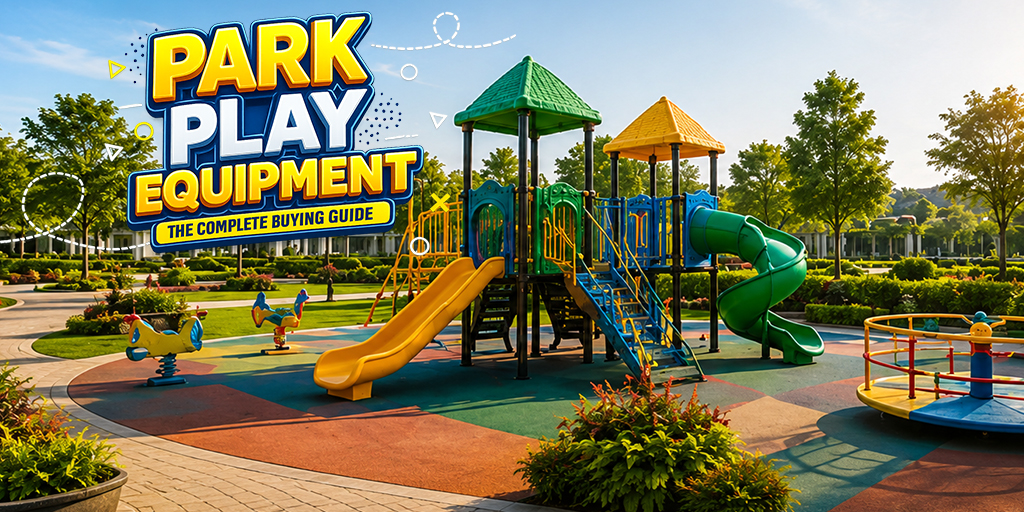
Park Play Equipment: A Professional Guide to Playground & Recreational Space Infrastructure
Public parks are the heartbeat of a community. You know this better than anyone. When you're staring at a blank plot of land, you aren't just looking at mud and grass. You're looking at the place where a toddler will take their first brave steps across a bridge, or where a group of ten-year-olds will dream up an imaginary world for the afternoon.
At the centre of it all is the park play equipment. This gear is the engine that drives activity, connection, and growth in your neighbourhood. When you choose the right pieces, you aren't just filling a space; you are building a social asset that defines the character of your city.
You're building memories. But you're also carrying a heavy load of responsibility. You need that space to be safe, durable, and actually worth the spend on it. Getting it right is hard, but when you see a park full of laughing kids, you know it was worth the stress.
This guide gives you a clear, step-by-step roadmap for choosing the right gear and managing your project with confidence.
Understanding Why Playground Equipment Works For Public And Recreational Areas
It may sound trivial, but choosing playground equipment for a park is somewhat different from buying equipment for schools. For the latter, the selection process is rather limited as school playgrounds are designed only for pupils of a particular age range. Public parks should welcome absolutely anyone at any moment of the day. When you are designing a high-quality recreational space, you must consider the needs of the entire community, not just one demographic
Therefore, you'll need a versatile park play equipment set to address different age groups. Depending on the objectives you wish to achieve, you may opt for these types of playground facilities:
Multi-play units
These are your bread and butter, it's efficient, and it gives you the most value for your budget. By combining slides, bridges, and platforms, you're using your space well and giving kids different ways to play in one spot.
Swing sets
You can't skip these. You'll hear about it from parents if you do. Swings are timeless, and they're the one thing that never seems to go out of style for any generation.
Climbing structures
This is where you help kids build confidence. Whether it's a cargo net or a climbing wall, you're giving them a way to test their limits. That's the kind of healthy challenge that makes a park worth visiting.
Adventure areas
If you want to keep the older kids from getting bored, give them something that pushes them physically. Adventure areas change the dynamic. They work because they stop being "playgrounds" and become challenges.
Fitness equipment
Don't just design for the kids. If you place fitness gear for adults nearby, you turn the park into a destination for the whole family. Parents are much more likely to stay and supervise if they have something to do, too.
Inclusive structures
A park that doesn't invite everyone is a miss. This isn't just about meeting codes; it's about making sure that a child in a wheelchair or someone with different sensory needs isn't left watching from the sidelines.
Choosing Reliable Play Park Equipment Suppliers
If you choose the wrong playground equipment supplier, you're basically signing up for a future of budget headaches and safety audits. These can turn into a nightmare. Choosing an experienced playground equipment supplier will guarantee you get the necessary guidance about maintenance procedures and other vital information from the start. To know who the right partner is, focus on these four aspects:
Accreditation
Make sure that the manufacturer has the required accreditation to guarantee product performance. Such certificates as EN 1176/1177 and ASTM F1487 are your primary safeguards.
Material Quality
You need to be certain about the material used to manufacture your equipment. Thus, ask your contractor whether they use protective layers of steel, UV-resistant plastic elements, and materials that can resist wear and tear. It is also important to ask if their playground accessories are made of recycled materials like HDPE.
Experience and Portfolio
Having many projects behind them means that a company knows what they're doing. Request to look through examples of playground infrastructure installed for their past clients.
After-Sales Service
The project doesn't end when the play equipment is installed. It requires an after-sales service that's there to support. That is why you need a supplier or manufacturer that sticks around after the park is set up. The contractor needs to provide clear maintenance manuals and actually keep spare parts in stock, rather than leaving you to hunt down a proprietary bolt.
Remember, do not settle for a supplier who ghosts you the moment the invoice is paid.
If you are looking for more details on finding the right park equipment manufacturer, read the Complete Buyer's Guide for Schools, Parks & Commercial Projects
Playground Equipment: Safety Standards for Public Parks
Safety is not merely a task of surface maintenance. It is an important design principle that must be integrated during the selection and installation process. When you prioritize safety at the design stage, you protect your community and ensure the longevity of your investment in playground infrastructure.
- Equipment Spacing: Congestion is a frequent cause of accidents in public spaces. When selecting a layout, ensure sufficient distance between structures, especially those exceeding 30 inches in height, to maintain clear "use zones." Well-structured, spacious equipment prevents collisions around high-traffic elements.
- Entrapment Mitigation: During the equipment selection process, perform a thorough review to identify and eliminate gaps in guardrails, platforms, or ladder rungs. Addressing these design risks before installation is a crucial step in creating a secure environment. A slight gap or a minor opening can pose significant hazards, which you would want to avoid at all costs.
- Optimizing Visibility: Effective management depends on good supervision. Plan your layout to remove blind spots and keep distances between equipment clear. This ensures the entire area remains visible from paths and benches, allowing for quick action if an emergency occurs.
Play Area Layout for Public Parks
The success of a project often hinges on how the space is partitioned. Organizing the layout through effective zoning is a commonly used best practice. This is because it dictates the selection and placement of structures based on specific age groups. These groups are typically toddlers (ages 2--5) and older children (ages 5--12).
By grouping equipment this way, planners can tailor their procurement to the physical capabilities of each demographic. The approach does not just improve the overall functionality of the playground; it also maximizes the efficiency of the layout. After all, you want a recreational area to remain productive, safe, and well-organized for the community.
Why Universal Design Is Important Now
Modern public parks are increasingly prioritizing universal design to ensure accessibility for all users. When selecting your installations, this means incorporating features like sensory play panels, widened passages, and transfer decks into the procurement plan. Adopting these inclusive elements is essential, as it allows for the creation of spaces where children of all abilities can participate equally, rather than being sidelined.
To find out more about the topic, take a look at our post "Inclusive Playground Design Ideas".
Handling Public and Governmental Projects
Large-scale public and residential projects require rigorous adherence to complex regulatory frameworks. When selecting equipment for these sites, planners must prioritize solutions that satisfy strict safety and accessibility standards to avoid significant delays. The following factors are critical for maintaining compliance:
Bid Documentation
Clearly state the requirements of your project, including material specifications and installation schedule.
Lifecycle Cost Assessment
When determining a project budget, don't just consider the cost of equipment. Estimate future maintenance costs to determine your investment return period. Investing in premium steel will pay off in 15 years.
Installation
Successful installation requires two key steps: proper preparation of the sub-base and safety surfacing, followed by the expert assembly of the playground equipment.
When managing municipal projects, vetting your play park equipment suppliers early in the process ensures you remain compliant with local regulations.
FAQ
What equipment is needed in public parks?
In places that have high traffic, it is reasonable to install heavy-duty play park equipment made of modular steel. Classic playground equipment will suit public parks fine.
How long does equipment last?
Depending on how regularly it is maintained, play park equipment's life expectancy varies between 10 and 20 years.
How often should I perform inspections?
For play park equipment, daily visual inspection is recommended. An annual professional check-up will be performed.
Can playground equipment be customized?
Yes. Many leading play park equipment suppliers provide you with options to choose colour schemes and themes for playground equipment.
What should I look for in playground equipment suppliers?
When evaluating play park equipment suppliers, prioritize their adherence to international safety certifications (such as ASTM or EN standards) and their ability to provide comprehensive long-term support. You should also look for a proven portfolio of municipal projects, high-quality material specifications, and clear, transparent warranty coverage for both static and moving parts.
Contact Us to Schedule a Consulting Session
Contact our team of experts for advice on selecting the best park play equipment and vetted play park equipment suppliers for your next project.