



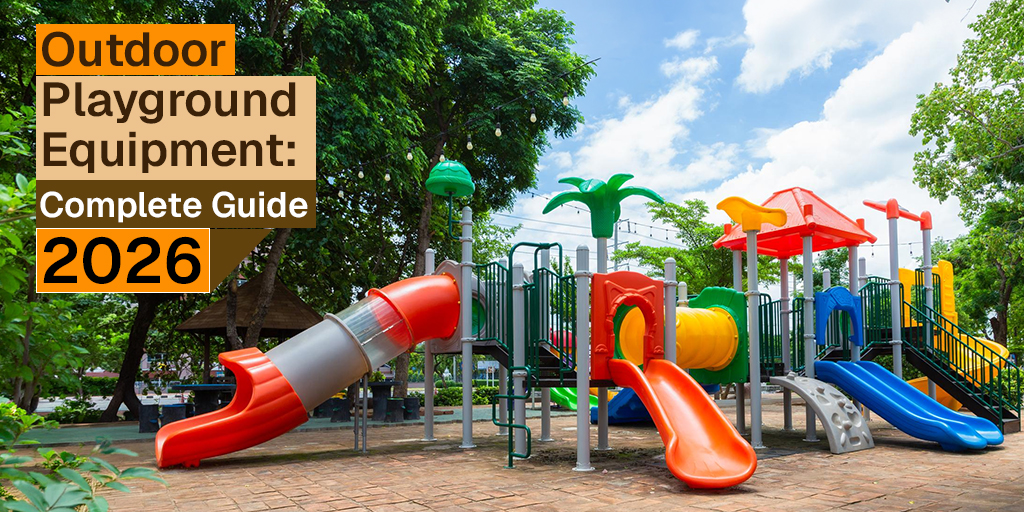
Outdoor Playground Equipment: Complete Guide for Parks, Safety & Durability (2026)
Outdoor spaces are changing. In 2026, people want more than just a spot for outdoor playground equipment. The focus is shifting toward areas that are welcoming to everyone and easy to maintain. It’s about creating places where a senior can practice mobility just steps away from a toddler’s first climb.
But building for everyone while keeping things durable takes specific planning. You have to know which materials can actually handle the weather and which designs make people want to show up. Whether you’re picking out children's play equipment for a school or planning fitness equipment in parks for a housing society, this guide covers the high-durability essentials you need to build something that lasts a decade, not just a season.
Defining Modern Outdoor Playground Equipment
Playground equipment today is more than just a swing set and a slide. When it comes to playground sets and fitness equipment, planners usually think in three categories, each designed for different needs, these are:
Slides, Swings, and Climbers: These units are the classics, but today they’ve evolved. Climbers are now geometric rope webs that build balance and motor skills, while swings come in basket styles and parent–child seats, designed with inclusion from the start.
Choosing the right configuration can be daunting; for a detailed breakdown on selecting specific models, see our guide on How to choose the right outdoor playground sets and slides for kids.
Multi-Play Sets: These sets are basically bridges, tunnels, slides, and panels combined into one system. The optimal goal with these multi activity outdoor play equipment units is flow; kids move from one activity to the next without bottlenecks. In smaller spaces, this setup delivers the most play value per square meter.
Themed Equipment: Think of it like this, a castle-shaped climber isn’t just a slide, it’s a story. Well-installed themed designs spark imagination and keep kids engaged longer, supporting the kind of open-ended play linked to stronger cognitive growth.
What to Actually Evaluate in Children's Play Equipment
When planning a kiddie play area, visual appeal often becomes the easiest factor to focus on while reviewing a catalogue of children's play equipment. But, here's where the real evaluation takes place:
Age Zoning: A five-year-old and a teen play differently. They have different risk tolerances, varying strengths, and divergent supervisory needs. A well-integrated play area separates these zones by height, grip complexity, and challenge level. Toddler areas stay low to the ground with easy grip features. On the other hand, older children need height, speed, and complexity. Combining these zones too closely is how injuries happen, leading to play area closures or costly retrofitting.
Safety by Design, Not Safety as an Add-On: In planning a play area, there's a common misconception that safety only means rubber flooring. It does not; it goes deeper than that. Premium children’s play equipment is engineered to eliminate entrapment zones before it leaves the factory, gaps where a finger can catch, chains where a drawstring can snag, and protrusions that create fall risks. Often, these vague hazards are the ones that show up in incident reports years after installation.
Material Quality under Load: If equipment feels lightweight or flimsy during installation, it most likely won't survive a monsoon season, let alone ten years of daily use. The materials question is so important that it deserves its own section, which is what comes next.
Durability Benchmarks: Selecting Maintenance-Free Playground Materials
Ask any play area manager who's replaced a playground more than twice in a decade, and they'll likely give you the same answer: the difference was in the materials.
Galvanized Steel (Hot Dipped): Think of this as the equipment’s skeleton. To keep it strong, we use hot-dipped galvanization to kill rust at the source—before it even starts. In humid or coastal climates like India’s, settling for anything less is a hidden maintenance cost waiting to surface. You might think taking a shortcut would save you a few dollars today, but don't trade long-term durability for a cheaper Day 1 price tag.
LLDPE Plastic (UV Stabilised): Linear Low-Density Polyethylene is the material standard for slides, panels, and cladding. UV stabilisation means the reds and blues that sold the project to the community actually stay that colour through years of direct sun exposure, rather than fading to the chalky, washed-out look that signals a play area in decline.
FRP (Fibre Reinforced Plastic): Used for heavy load components like large slides and canopy structures. It offers exceptional strength with lower weight, which matters for both structural integrity and installation logistics.
EPDM Rubber Flooring: The safety surface isn't an afterthought. It's arguably the most consequential purchasing decision in any play space. Poured-in-place rubber or interlocking EPDM mats are the fall zone standard. Compromising here renders every other quality decision irrelevant.
The following chart details essential components required for a resilient 2026 play space:
| Material | Key Benefit | Best For |
| Galvanized Steel | Rust resistance | Structural skeletons & humid climates |
| LLDPE Plastic | UV stabilization | Slides, panels & color retention |
| FRP | Load-bearing strength | Large slides & canopy structures |
| EPDM Rubber | Impact absorption | Safety flooring & fall zones |
Fitness Equipment in Play Areas: The Design Shift Nobody Talks About Enough
A significant change in outdoor play area planning over the last few years isn’t actually about children; it’s fitness equipment. Installing these in play areas has shifted from being a “nice to have” to becoming a community necessity.
The model is straightforward: air walkers, waist twisters, sit-up benches, and outdoor elliptical machines are positioned so that, while kids enjoy play structures, the adults accompanying them can complete a circuit without leaving the space. For optimal performance and satisfaction, the design logic must go beyond individual health benefits. Play areas with active adult users stay busier throughout the day. Busier play areas are better maintained. Better-maintained play areas attract more consistent use. It’s a compounding return on a single infrastructure decision.
The best fitness equipment in parks relies on bodyweight resistance rather than iron plates, making the machines weather-resistant and accessible across a wide age range — from active seniors to trained athletes. That multi-generational usability is what transforms a play area from a children's facility into a genuine community asset.
Maintenance: The Part Every Buying Guide Skips
There is no such thing as zero-maintenance outdoor playground equipment. Anyone selling you that idea is factoring their replacement revenue into the pitch. What does exist is low-maintenance equipment, and the difference between low and high maintenance is almost entirely determined at the point of purchase.
Anti-Rust Coatings: Modern powder coating isn't cosmetic. It's a protective layer. It needs to be thick, even, and impact-resistant, not a thin application that starts chipping within a year of installation.
Hardware Specifications: The joints and connectors are where most equipment fails. Stainless steel hardware, or connectors fitted with weatherproof caps, is the standard for equipment expected to survive freeze-thaw cycles and sustained humidity.
Routine Checks (Monthly): A monthly inspection doesn't require specialist knowledge. Tighten loose bolts. Check for user-generated damage, graffiti, scratched surfaces, and anything that compromises coating integrity. Confirm the fall zone surfacing hasn't thinned out under high traffic points like the base of slides. This kind of proactive maintenance is what the ROI projections assume when they quote a 10-15 year lifespan.
Annual Professional Inspection: For public facing installations, an annual structural and safety audit isn't optional; it's the baseline for responsible play area management.
How to Choose a Outdoor Playground Equipment Supplier (And What Most Buyers Get Wrong)
The lowest quote is rarely the best decision. It's usually the beginning of a more expensive relationship. When vetting an outdoor playground equipment supplier, the questions that matter most aren't about the initial price. They're about certifications, post-installation support, and parts availability three years from now when a specific component needs replacing.
Look for suppliers who follow recognised international safety standards. Confirm they offer installation support, not just product delivery. Understand the warranty terms specifically on moving parts and anti-rust coatings, which are the two highest failure areas in outdoor equipment over time.
Here's where hands-on experience really counts. Arihant Play brings years of building tough gear for play areas—spots where a breakdown means big trouble and quick fixes aren't an option. This know-how shapes their children’s play equipment: they design it as smart, fun setups that look sharp and last ages.
A play area is public infrastructure. Like roads and lighting, the quality of the investment determines the quality of the outcome for years, sometimes decades. High-quality outdoor playground equipment pays for itself through lower lifecycle maintenance costs, reduced liability exposure, and the harder-to-quantify but equally real benefit of giving communities a place that people actually want to spend time in. Remember, invest in quality materials. Zone for all ages. Don't forget the adults. And choose a supplier you can call three years from now.
Frequently Asked Questions
What is outdoor playground equipment?
It's any structure designed for play or physical activity in an outdoor setting, from traditional swings and slides to complex rope climbers, themed play systems, and outdoor fitness stations.
What materials are used in children's play equipment?
The quality standard is hot-dipped galvanized steel for the frame, UV-stabilised LLDPE plastic for slides and panels, and stainless steel hardware throughout. These materials are selected specifically for their resistance to UV degradation, moisture, and sustained physical load.
What fitness equipment is installed in play areas?
Common installations include air walkers, sit-up benches, chest press machines, and lat-pull-downs. All are designed for outdoor weather conditions and operate on bodyweight resistance rather than iron plates, making them accessible and low-maintenance.
How long does outdoor playground equipment last?
Professional-grade equipment, properly specified and maintained, typically lasts 10 to 15 years. Residential-grade or budget equipment commonly shows significant wear within 2 to 3 years.
How do you maintain playground equipment?
Monthly: check and tighten bolts, inspect coatings for damage, and confirm fall zone surfacing is intact under high traffic areas. Annually: conduct a professional structural and safety inspection.
What should I check before buying playground equipment?
Safety certifications. Steel gauge and galvanisation method. UV rating on all plastic components. Supplier warranty terms on moving parts and coatings. And critically, the supplier's track record and parts availability post installation.